
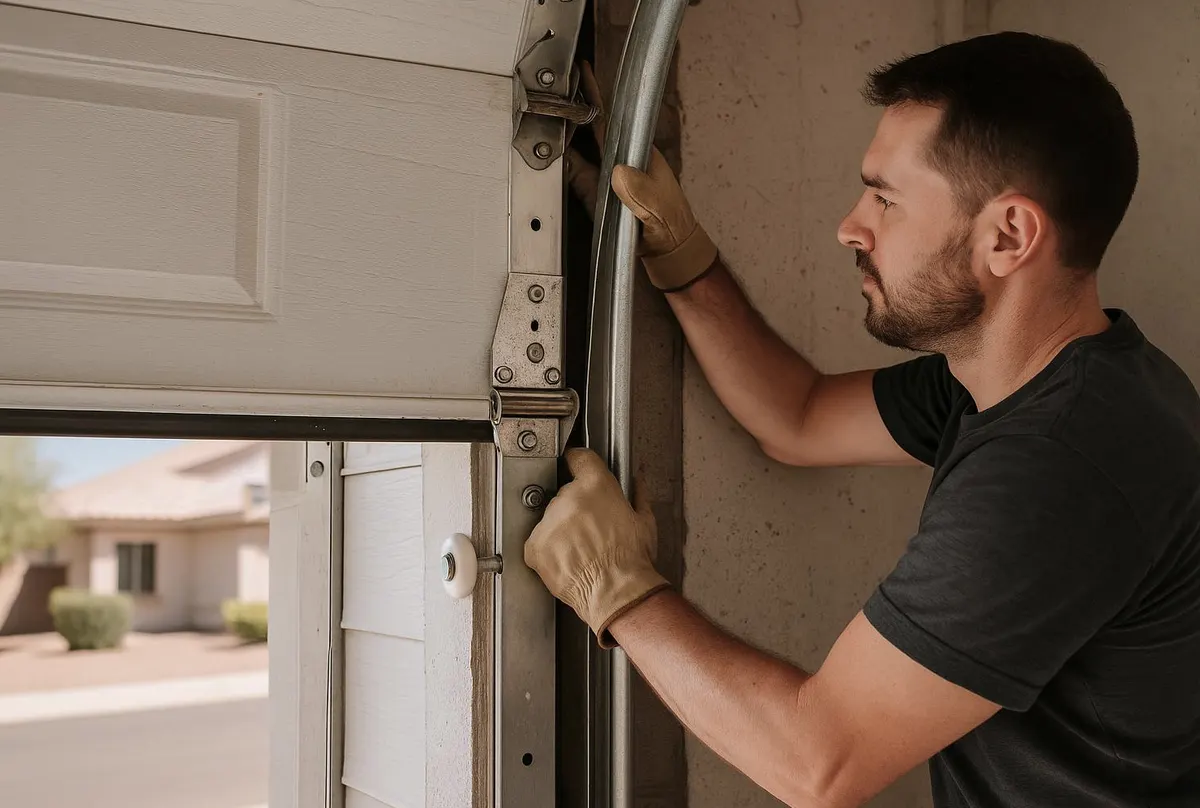
The Mistake Almost Everyone Makes First
Reach into most garages around Molino and you'll find a can of WD-40 sitting on the shelf, and it's usually the first thing people grab when their garage door starts squeaking. It's tempting because it's cheap, it's already there, and spraying it on does quiet the noise for a few days. The problem is that WD-40 is a water-displacer and light degreaser, not a lubricant. It actually strips existing grease off rollers and hinges, then evaporates quickly, especially in the heat we get most of the year. Within a week or two the squeak comes back worse, and the bare metal is now more exposed to the moisture in the air, which matters a lot here with the humidity, salt-tinged air drifting up from the coast, and afternoon storms that leave garages damp even when the door never opens.
The second common mistake is lubricating the tracks themselves. Tracks should be cleaned, not greased. A lubricated track collects dust, pollen, and grit into a gummy residue that actually makes the rollers bind. Keep that distinction in mind as you go through the steps below.
Tools You'll Need
- A garage-door-specific silicone spray lubricant, or white lithium grease for hinges and rollers
- Clean lint-free rags
- A soft-bristle brush or old toothbrush
- A step ladder
- Safety glasses
- Work gloves
Skip anything labeled as an all-purpose household oil, cooking oil, or grease designed for bike chains. Household oils are too thin and wash out fast in humid air, and they tend to gum up with dust. Silicone spray is the better all-around choice because it doesn't attract grit the way oil-based products do, and it holds up better through our hot, muggy stretches.
Step-by-Step: How to Lubricate a Garage Door
- Close the door and disconnect the opener. Pull the red release cord so you can move the door by hand. This keeps the opener from engaging while your hands are near the hardware.
- Wipe down the tracks with a dry rag. Remove dust, pollen, and any salt residue that's settled in, especially if your garage faces open air or gets a lot of wind-blown moisture. Do not spray lubricant on the tracks themselves.
- Inspect hinges, rollers, and the bottom brackets before you lubricate anything. Look for rust spots, cracked rollers, or hinges with visible wear. Lubricating rusted or damaged hardware just masks a problem that needs replacing.
- Lubricate the hinges. Apply a small amount of silicone spray or lithium grease to each hinge pivot point, then work the door up and down a few inches by hand so it works into the joint. Wipe off any excess so it doesn't drip onto the floor or attract dust.
- Lubricate the rollers. If you have steel rollers, lubricate the bearings at the center, not the wheel surface. If you have nylon rollers, only the bearing needs lubrication; the nylon itself should stay dry.
- Treat the opener's chain or screw-drive rail. A light coat of the same silicone lubricant keeps the opener running quietly. Avoid soaking it, since excess lubricant just drips and collects dust over time.
- Lubricate the lock mechanism if your door has one. A small amount of graphite or silicone spray in the key cylinder and slide bolt keeps it from sticking, which matters more after a humid summer.
- Run the door up and down by hand three or four times. This spreads the lubricant evenly and lets you feel for any grinding, catching, or uneven resistance you might not have noticed before.
- Wipe away all excess lubricant. Anything left pooling on hardware becomes a magnet for dust and pollen, which turns into grit that actually accelerates wear.
- Reconnect the opener and test a full cycle. Watch and listen for any remaining noise, hesitation, or uneven movement.
Doing this every three to four months is a reasonable schedule for most homes in this area, and it's worth doing a round heading into hurricane season when you want the door moving smoothly and sealing well under wind load, not just squeaking through it.
What a Homeowner Can Handle, and What Needs a Technician
Cleaning tracks, lubricating hinges and rollers, and treating the opener chain are all reasonable DIY tasks with basic tools and a little care. Where you should stop and call for help:
- Torsion springs. These are under heavy tension and store enough energy to cause serious injury if they let go while you're working near them. Spring lubrication and adjustment should go to a technician.
- Frayed or rusted cables. If you see fraying strands or heavy rust on the lift cables, that's a sign of a weakening system, not a lubrication issue.
- A door that's off track or binding badly. Forcing a stuck door or trying to realign a track yourself can bend hardware further and turn a small repair into a full panel or track replacement.
- Grinding or clunking from the opener itself. That often points to gear wear inside the unit, which lubricant won't fix.
When to Call Molino Garage Door
If you've gone through this routine and the door still squeaks, drags, or hesitates, or if you notice rust forming on springs and hardware faster than it should, it's time to call in a technician rather than keep layering on lubricant. Our team handles Garage Door Maintenance & Tune-Up visits that cover spring tension, cable condition, and full hardware inspection, things that go beyond what's safe to check from a ladder at home. If the issue turns out to be a worn or rusted spring, we handle Garage Door Spring Repair on the spot with the right parts rated for the loads our weather puts on these systems.
If your garage door needs more than a good cleaning and a few drops of lubricant, give Molino Garage Door a call. We serve homeowners throughout Molino, FL and the surrounding Escambia County area, and we can usually get a technician out fast.